Basement Finishing Mistakes That Can Hide Moisture Problems
Basement finishing mistakes can trap moisture behind walls, under floors, and around finished surfaces. HomeRemodelNorthbend.com checks for dampness, damage, and drainage concerns before our team installs new basement finishes.
Request an EstimateHow Finished Basements Hide Moisture Problems
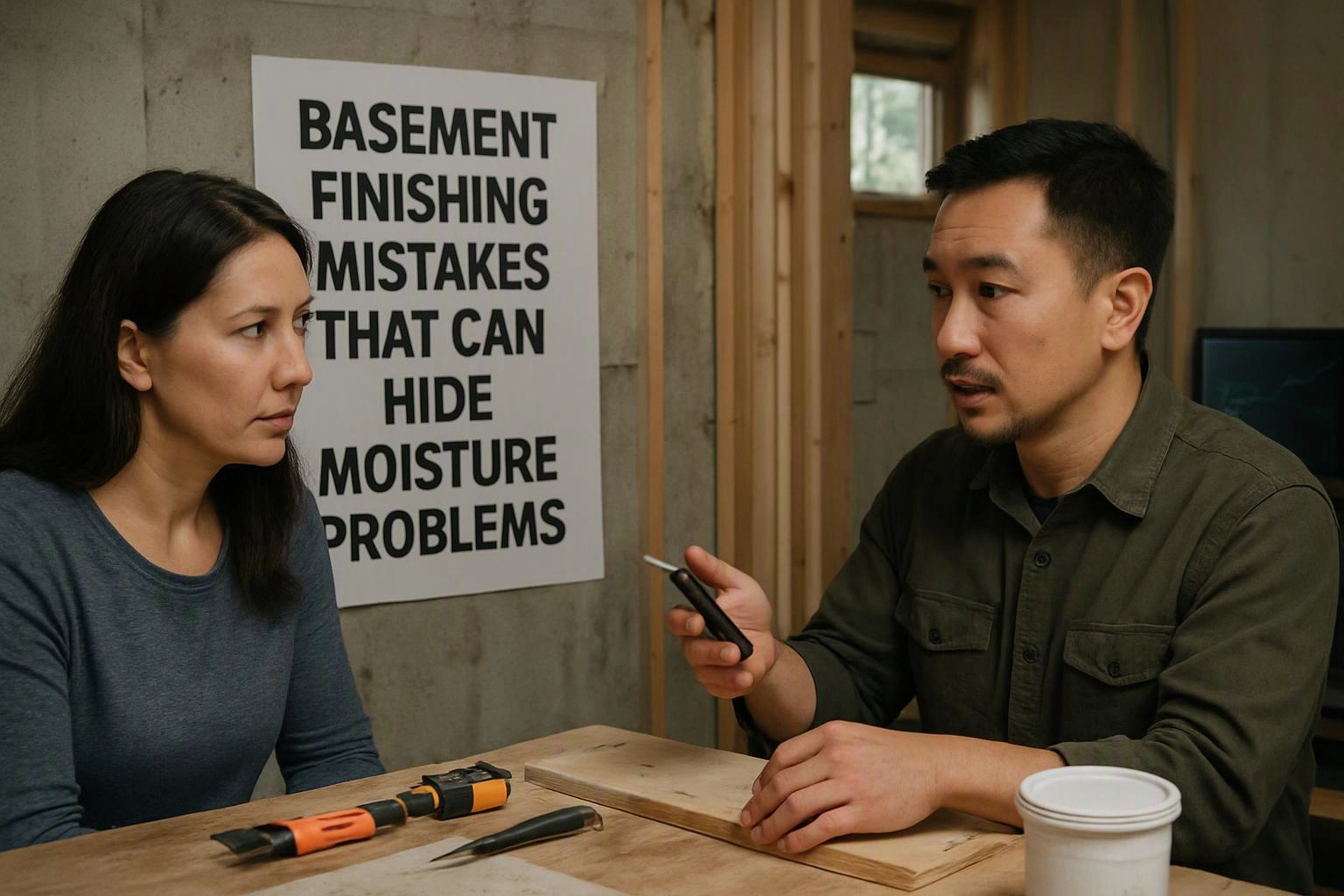
Finished basements hide moisture when new walls, floors, or coatings cover damp materials and block inspection. A finished basement can look clean while water damage remains behind drywall or below flooring.
HomeRemodelNorthbend.com checks the planned remodeling area before covering the foundation wall or concrete slab. We look for water intrusion, condensation, wet insulation, and other signs that can affect the repair scope.
Visible repairs can also hide the history of a basement water problem. Fresh paint, new flooring, or patched drywall may cover stains without correcting the water source.
Quick Reference: Mistakes, Warning Signs, and Fixes
A moisture inspection connects visible warning signs with likely hidden problems. The table below shows what we look for before basement remodeling.
| Mistake | Warning sign | Likely concern | Safer fix |
|---|---|---|---|
| Covering damp concrete | Spongy flooring or floor moisture | Wet slab or damaged subfloor | Test the floor and correct moisture first |
| Installing drywall against the wall | Musty smell or soft drywall | Moisture behind drywall | Inspect the wall and plan proper separation |
| Painting over stains | Peeling paint or water stains | Surface moisture or active entry | Trace the source before coating |
| Closing access areas | Blocked drain or pump access | Harder service and hidden drainage issues | Keep service access available |
These signs don't prove the same cause in every basement. Our crew checks the materials, wall conditions, and drainage layout before choosing a correction.
Mistakes That Can Hide Damp Basement Damage
Basement finishing mistakes can conceal water intrusion and make later repairs more disruptive. They often happen when the finish materials are chosen before the basement conditions are understood.
We connect each warning sign to the likely repair scope. That review helps us decide whether the plan needs drainage work, material changes, access panels, or surface repairs.
Covering Damp Concrete With New Flooring
Basement flooring can trap floor moisture when new materials cover a damp concrete slab. This mistake often happens when a floor looks dry during a quick visual check.
Moisture can affect flooring adhesive, underlayment, and the subfloor. The cost of correction depends on the affected materials, removal needs, and the condition of the slab.
We inspect the concrete and surrounding edges before flooring installation. Our fix may include correcting the water source, replacing damaged layers, and selecting moisture-resistant materials.
Installing Drywall Against a Wet Foundation Wall
Drywall can hide wall moisture when it sits against a wet foundation wall. This mistake can leave damp insulation and concealed water damage behind the finished surface.
Water may enter through a foundation leak, condensation, or poor drainage. The correction cost depends on how much drywall, insulation, framing, and finish work needs attention.
We inspect the wall before drywall installation and allow room for proper review and ventilation. We also replace materials that have lost their strength or show damage.
Painting Over Peeling or Stained Surfaces
Peeling paint and water stains show that surface moisture may still be present. Painting over them can hide the warning without stopping water entry.
Paint may fail again when masonry remains damp or a wall leak continues. The cost depends on the source, surface condition, coating removal, and needed repairs.
We trace the moisture before applying masonry paint or another finish. Our team prepares the surface only after the water problem receives proper attention.
Sealing Walls Before Finding the Water Source
Wall sealant can hide water intrusion when it is applied before the water source is identified. This approach can cover a foundation leak without correcting drainage or entry points.
Sealing products may fail when outside water pressure or poor drainage continues. The cost depends on the source, access, damaged finishes, and the repair scope.
We inspect the foundation wall, drainage conditions, and visible entry paths first. Then we choose a repair and sealant plan that matches the cause.
Building Over a Musty Basement Smell
A musty smell can signal damp materials, hidden water damage, or mold risk in a basement. Building over the odor can trap poor indoor air and make the source harder to locate.
The correction cost depends on the materials affected, the source of dampness, and the required removal or cleaning. Odor alone doesn't identify the exact problem.
We inspect areas around walls, flooring, insulation, and drainage paths. We address the damp materials and water source before closing the space.
Ignoring Spongy or Soft Basement Flooring
Spongy flooring can point to water damage below the finished surface. Soft spots may involve flooring, underlayment, subfloor, or floor structure.
Covering a weak area can spread damage and increase the repair scope. The cost depends on the damaged layers and whether nearby framing also needs work.
We check the flooring system before installing new materials. Our crew removes affected layers when needed and restores a sound base for the finish.
Closing Off Access to Plumbing and Drainage Areas
Closing off plumbing and drainage areas can hide leaks and prevent needed service. A covered floor drain or sump pump can also make future maintenance harder.
Blocked access can increase repair work when a leak or backup occurs. The cost depends on the finish materials, access design, and repairs needed behind the surface.
We map plumbing access, the floor drain, and the sump pump before finishing. Our plan keeps service points reachable through suitable openings or access panels.
Finishing Around Cracks Without Checking Their Cause
Foundation cracks can allow water entry and may also reflect structural movement. Finishing around them can hide changes that need further review.
The cost depends on the crack location, active water entry, movement concerns, and the surrounding finish work. A surface patch alone may not address the cause.
We inspect wall cracks before covering them with drywall or other materials. We identify the repair path and keep the finish plan aligned with the wall condition.
Using Water-Sensitive Materials in Damp Areas
Water-sensitive building materials can fail when they are installed in damp areas. Common risks include swelling, staining, odor, and loss of strength.
Material failure can lead to repeated replacement and a larger repair scope. The cost depends on the selected finish materials, exposure, and damage already present.
We match materials to the moisture conditions before installation. Our team uses moisture-resistant drywall and suitable flooring materials where the plan calls for them.
What We Check Before Finishing a Basement
Our moisture inspection checks the surfaces and systems that can affect basement remodeling. We complete the review before drywall installation or flooring installation begins.
Our findings guide the repair plan and the finish materials. We also account for applicable inspection and code requirements before covered work proceeds.
How Moisture Problems Change the Remodeling Plan
Moisture findings can change the remodeling plan by affecting repairs, materials, access, and the finished surface. A dry-looking room may still need changes before construction starts.
We may adjust the repair scope when water affects drywall, flooring, framing, or insulation. We also consider ventilation, drainage, and the best way to keep service areas open.
Project cost drivers include hidden damage, removal work, drainage corrections, material selection, and finish complexity. We explain what the quote includes after reviewing the basement conditions.
Our team can help you plan the broader Basement Remodeling work around those findings.
When to Call HomeRemodelNorthbend.com Before Finishing
Call HomeRemodelNorthbend.com before finishing when visible or sensory signs suggest moisture may remain behind the planned surfaces. Early review helps us protect the new drywall and flooring plan.
We handle the inspection and finish planning so hidden conditions receive attention before they are covered.
Plan a Basement Finish That Does Not Hide Moisture
Basement remodeling should make moisture conditions easier to manage, not harder to inspect. We plan drywall installation and flooring installation around the basement's actual condition.
Our process keeps the water source, drainage, materials, and service access in view. We select finish materials that support moisture control and fit the planned use of the room.
Request a project review when you see hidden water damage signs or want to finish an unfinished basement. HomeRemodelNorthbend.com can explain the repair scope, material choices, and quote details before work begins.
Questions About Basement Finishing and Hidden Moisture
How can you tell if a finished basement was built over water damage?
HomeRemodelNorthbend.com looks for musty smells, peeling paint, water stains, soft flooring, damaged drywall, and blocked drainage access. We also inspect foundation walls, the concrete slab, and finish transitions for signs that newer materials cover older damage.
Can a musty smell remain after basement walls are finished?
Yes, a musty smell can remain when damp materials, hidden moisture, poor ventilation, or water entry continue behind finished walls. We inspect the wall system and nearby materials before deciding what needs correction.
What should be checked before replacing a damp basement floor?
A damp basement floor needs a review of the concrete slab, floor moisture, subfloor, drainage, and nearby water entry. We identify damaged layers and confirm the floor can support the planned flooring materials.