Why You Should Investigate Wall and Floor Damage Before Covering It
Wall and floor damage requires investigation before covering. HomeRemodelNorthbend.com investigates the cause first, then plans repairs before installing drywall or flooring. Covering damaged walls or floors can hide moisture, movement, rot, and weak materials until the problem spreads.
Request an EstimateWhy Covering Damage Creates Remodeling Problems
Wall damage and floor damage can hide serious conditions beneath attractive finishes. Covering damaged surfaces can trap moisture and hide conditions that weaken the remodel.
Water leaks can leave moisture damage inside drywall, framing, insulation, and subfloor materials. We trace the moisture source before planning demolition or finish installation.
Structural damage can also appear as wall movement, bowed walls, wall cracks, floor cracks, or uneven floors. Our team checks whether the surface problem points to damaged framing, joists, subfloor, or foundation movement.
Remodeling mistakes happen when surface damage is treated as a cosmetic issue. We document the property condition, define the repair scope, and sequence the work before new materials cover the area.
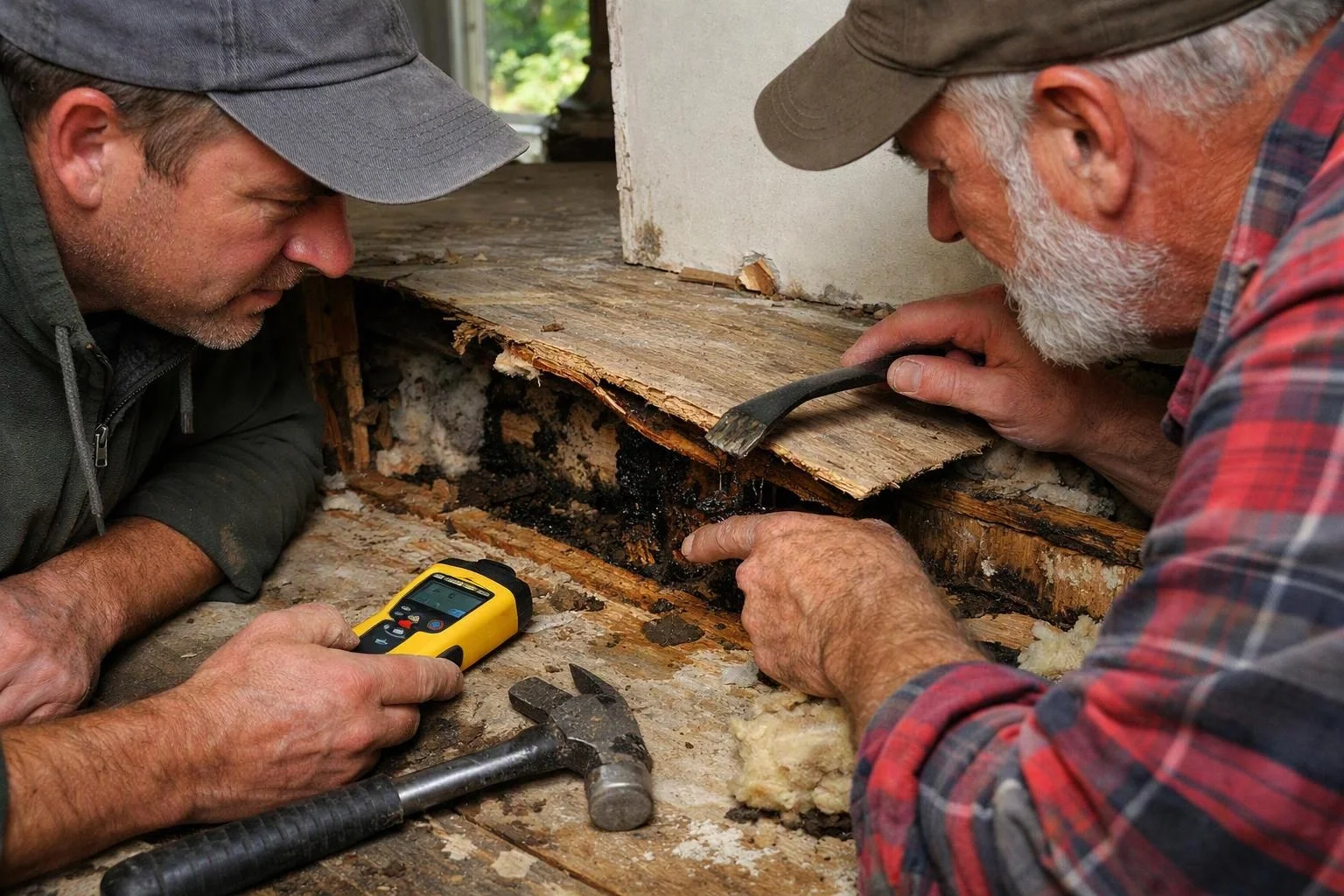
Which Wall and Floor Warning Signs Need Investigation?
Water stains, soft materials, unusual movement, and widening cracks need investigation before new finishes are installed. The visible symptom helps us decide where to inspect first.
Each warning sign can have more than one cause. We compare the condition of the surface with nearby framing, subfloor, moisture paths, and previous repairs.
| Warning sign | What it may indicate | What we check |
|---|---|---|
| Water stains | A past or active moisture source | Leak paths, damp materials, and drywall condition |
| Soft drywall | Moisture damage or weakened gypsum | The moisture source and the replacement boundary |
| Soft flooring | Water damage or subfloor damage | Floor covering, subfloor, joists, and nearby leaks |
| Wall cracks | Drywall movement, framing stress, or foundation movement | Crack direction, width changes, framing, and support |
| Floor cracks | Movement below the finish or damaged backing | Floor layers and the condition below them |
| Bowed walls | Framing movement, moisture, or pressure | Wall framing, studs, moisture, and structural support |
| Uneven floors | Subfloor movement, damaged joists, or poor leveling | Subfloor condition and the needed leveling method |
| Musty odors | Damp materials or hidden moisture | Ventilation, damp areas, and concealed materials |
Mistake: Painting Over Water-Stained Drywall
Painting over water-stained drywall hides the mark without correcting the moisture source. Hidden leaks can continue damaging the wall cavity and nearby framing.
The cost depends on the leak repair, the amount of damaged drywall, and any affected insulation or framing. We trace the moisture source, remove unsound material, and complete drywall replacement before painting.
Mistake: Installing New Flooring Over Soft Areas
New flooring over soft areas can flex, separate, or fail because the subfloor lacks support. Water damage may have weakened the subfloor beneath the floor covering.
The repair scope depends on the damaged layers and the source of the water. We remove affected surfaces, inspect the subfloor, complete subfloor repair, and prepare a firm base for flooring installation.
Mistake: Filling Wall Cracks Without Checking Movement
Filling wall cracks without checking movement can leave the cause untouched. Drywall joints may crack again when framing or foundation movement continues.
The work involved depends on crack location, movement, and damaged framing. We assess the wall, identify needed structural repairs, and then repair the surface for a stable finish.
Mistake: Covering Uneven Floors With a New Finish
Covering uneven floors with a new finish can create visible seams, movement, and trip hazards. The subfloor must support the selected flooring materials.
The cost drivers include floor leveling, subfloor repair, and the finish material. We correct the floor condition before flooring installation begins.
Mistake: Closing Walls Before Checking Framing
Closing walls before checking framing can hide rot, warped studs, and weak structural support. Drywall installation then covers defects that may require later removal.
The repair scope depends on the condition and role of the damaged framing. We inspect wall framing, address structural repairs, and install drywall after the support is ready.
Mistake: Demolishing Surfaces Without Tracing the Damage
Demolishing surfaces without tracing the damage can miss the moisture path or remove more material than needed. Hidden defects may remain outside the first opening.
The cost depends on the damage boundaries, disposal needs, and repairs found behind the finish. Our crew uses targeted surface removal and safe demolition to expose the work area carefully.
Mistake: Ignoring Musty Odors and Damp Materials
Ignoring musty odors and damp materials can allow indoor moisture to remain hidden. Damp wall or floor materials can increase mold risk and cause finish failure.
The repair scope depends on the moisture source, affected materials, and ventilation needs. We investigate damp areas and plan removal, drying, and repairs before closing the space.
Mistake: Choosing Finishes Before Planning Repairs
Choosing finishes before planning repairs can lock the project into materials that do not suit the existing conditions. Finish materials must match the repaired wall and floor structure.
The cost depends on repair scope, material choices, and the required repair sequencing. We plan structural repairs, drywall installation, and flooring installation before final finish decisions.
What Can Happen When Damage Gets Covered?
Covered damage can cause new finishes to fail and can expand the repair work. Hidden moisture, structural weakness, and material failure often create remodeling rework.
New drywall can stain or loosen when the moisture source remains active. New flooring can move when damaged subfloor materials remain below it.
Unresolved movement can reopen wall cracks and floor cracks. We investigate the full repair scope before choosing demolition boundaries or finish materials.
How We Investigate Walls and Floors Before Remodeling
Our remodeling inspection connects visible damage with the conditions below the surface. We use the findings to create a clear repair plan.
Our team also considers applicable building requirements and inspection points when structural work or concealed repairs are involved. We explain when regulated work needs proper review and coordinate the work safely.
When Should You Call HomeRemodelNorthbend.com?
Call HomeRemodelNorthbend.com when damage may involve active moisture, unsafe surfaces, or structural movement. Early investigation helps protect the repair sequence.
Contact us before covering any condition that could spread or weaken the remodel.
How Investigation Changes the Remodeling Plan
Investigation changes the remodeling plan by placing cause control and repairs before finish installation. The findings determine repair sequencing, demolition scope, and material choices.
Structural repairs may need to come before drywall installation. Subfloor repair or floor leveling may need to come before flooring installation.
We also adjust the work plan when surface removal reveals hidden defects. That approach reduces remodeling rework and keeps the finish installation connected to the actual property condition.
Repair the Cause Before Installing New Finishes
Moisture control and structural repairs must come before new wall or floor finishes. HomeRemodelNorthbend.com repairs the underlying condition before our team installs new drywall or flooring.
Our work may include leak-related repairs, damaged framing repairs, subfloor repair, drywall replacement, and floor preparation. We then install finishes on surfaces that are ready to support them.
For more information about preparing walls correctly, see our Drywall Installation service. Proper preparation supports better remodeling quality and reduces finish failure.
What Information Should You Share Before the Estimate?
The damage location, visible symptoms, leak history, and planned finishes help us assess the remodeling work. Clear details help our team prepare for the right inspection and repair sequence.
Share where the damage began and whether it has changed. Tell us about water leaks, previous repairs, musty odors, soft areas, wall cracks, floor cracks, or movement.
Also describe your desired finishes, such as drywall, tile, hardwood, or other flooring materials. We use that information to plan compatible repairs and provide an estimate based on the actual scope.
Questions About Wall and Floor Damage Before Remodeling
Can water-damaged drywall be covered with new drywall?
No, water-damaged drywall should not be covered until HomeRemodelNorthbend.com identifies the moisture source and checks the wall cavity. We remove unsound material, address the cause, and complete drywall replacement when the surface is ready.
What do soft floors mean before a remodel?
Soft floors can mean water damage, weakened subfloor materials, damaged joists, or movement below the finish. We inspect the floor layers and complete needed subfloor repair before flooring installation.
Should wall cracks be repaired before painting?
Yes, wall cracks should be investigated before painting when they widen, return, or appear near bowed walls and uneven surfaces. We check drywall joints, framing, and possible foundation movement before completing the surface repair.
What happens if a subfloor is damaged before flooring installation?
Damaged subfloor materials can cause movement, uneven flooring, and finish failure. We trace the water damage or structural issue, complete subfloor repair, and prepare the surface before installing the new floor.
Wall and floor damage needs investigation before covering so moisture, movement, and weak materials don't become hidden defects. Contact HomeRemodelNorthbend.com to discuss the damage location, planned finishes, and next repair step.
Get a Free Estimate